Creating Untappd for Coffee with AI
- 2 minsWhat is Mug Shot?
I’ve had the idea of wanting an app or website that allows me to track the coffees I have, similar to the way Untappd works, but not enough time to dedicate to it. With the help of AI, I was able to much more quickly get a first version of this up and running. Now, I can share the coffees I drink with my friends, see what nearby cafes others are liking, and more.
Some of my Favorite Features
Feed
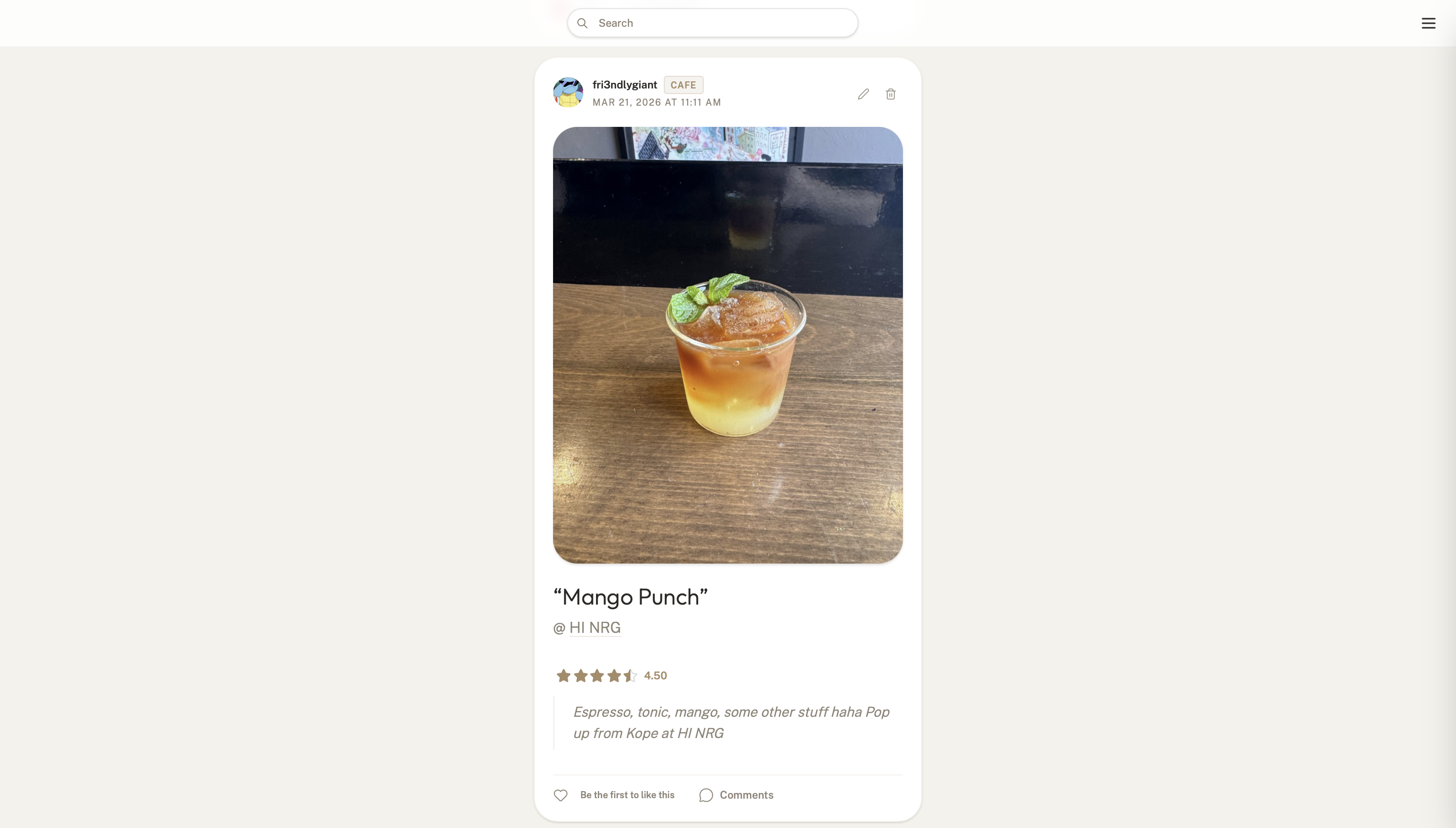 Infinitely scrollable feed of you and your friends’ coffee posts.
Nearby Cafes
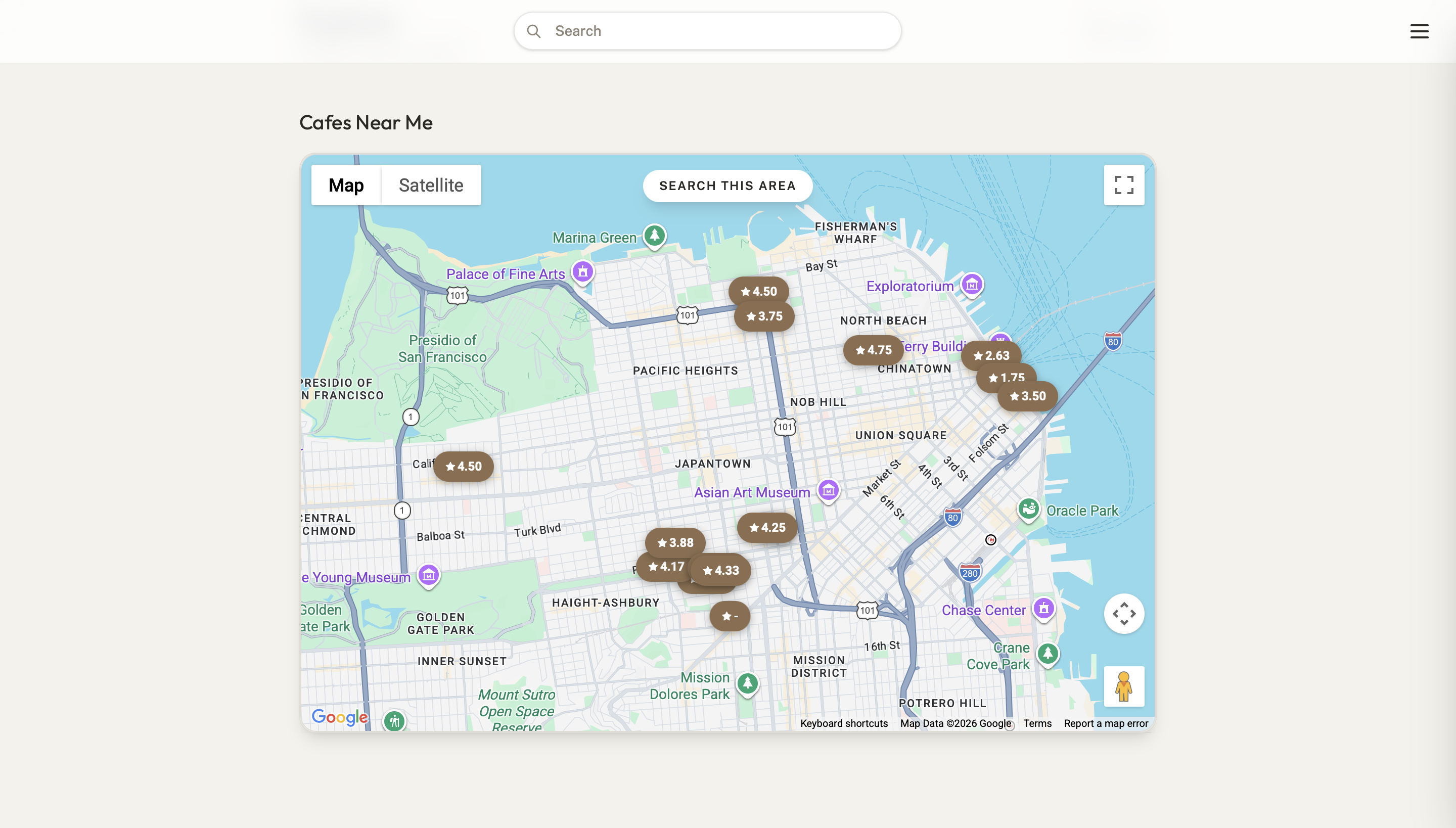 Google Maps powered map of nearby cafes, with the average user rating and number of checkins (posts).
Search Coffees
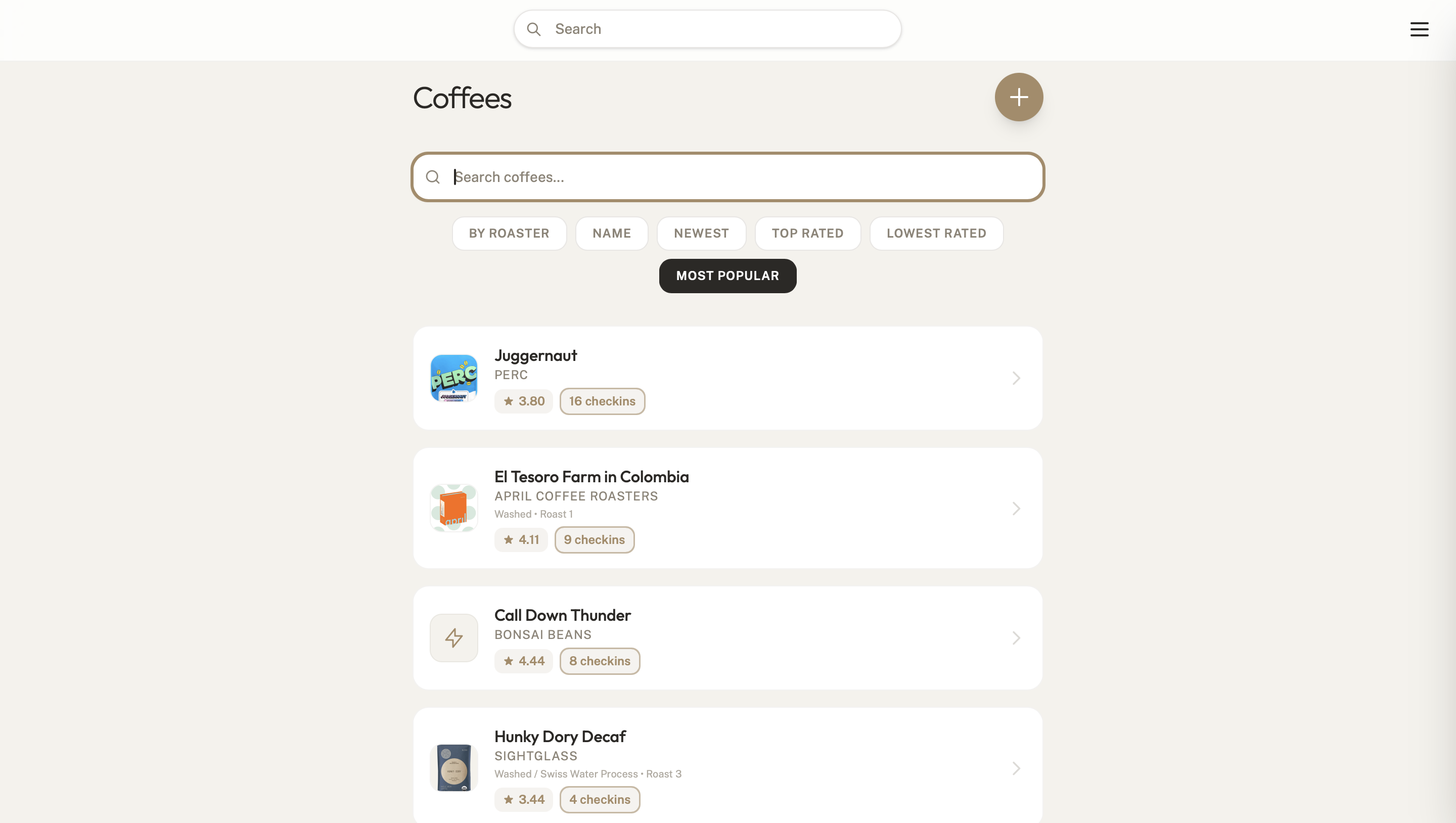 Search and sort the database of coffee beans to discover new coffee beans. The same functionality works with coffee roasters, cafes, brew methods, and coffee grinders.
Profile Pages
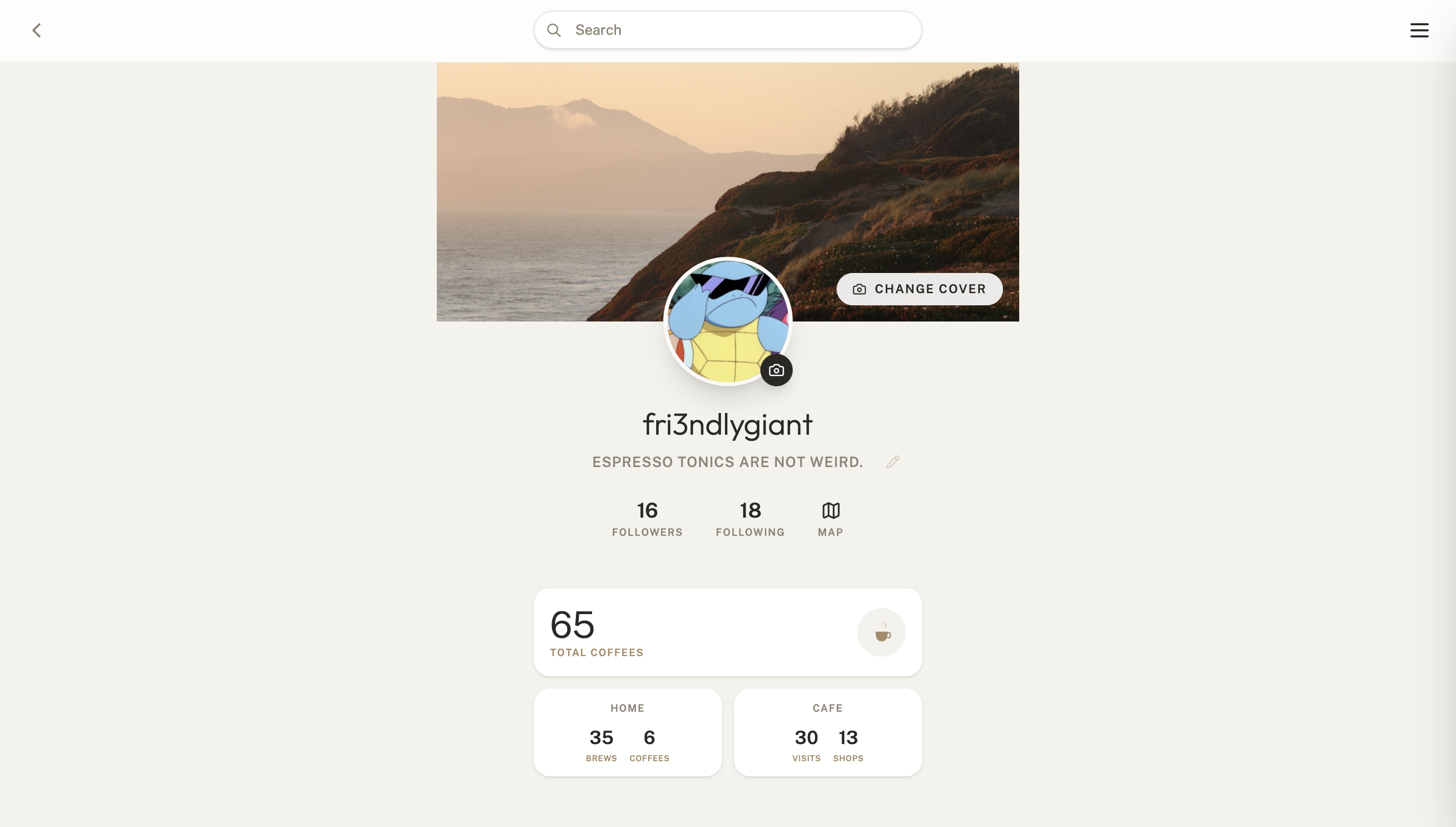 Users can upload their own profile and banner pictures, set a bio, and view stats of their lifetime coffees.
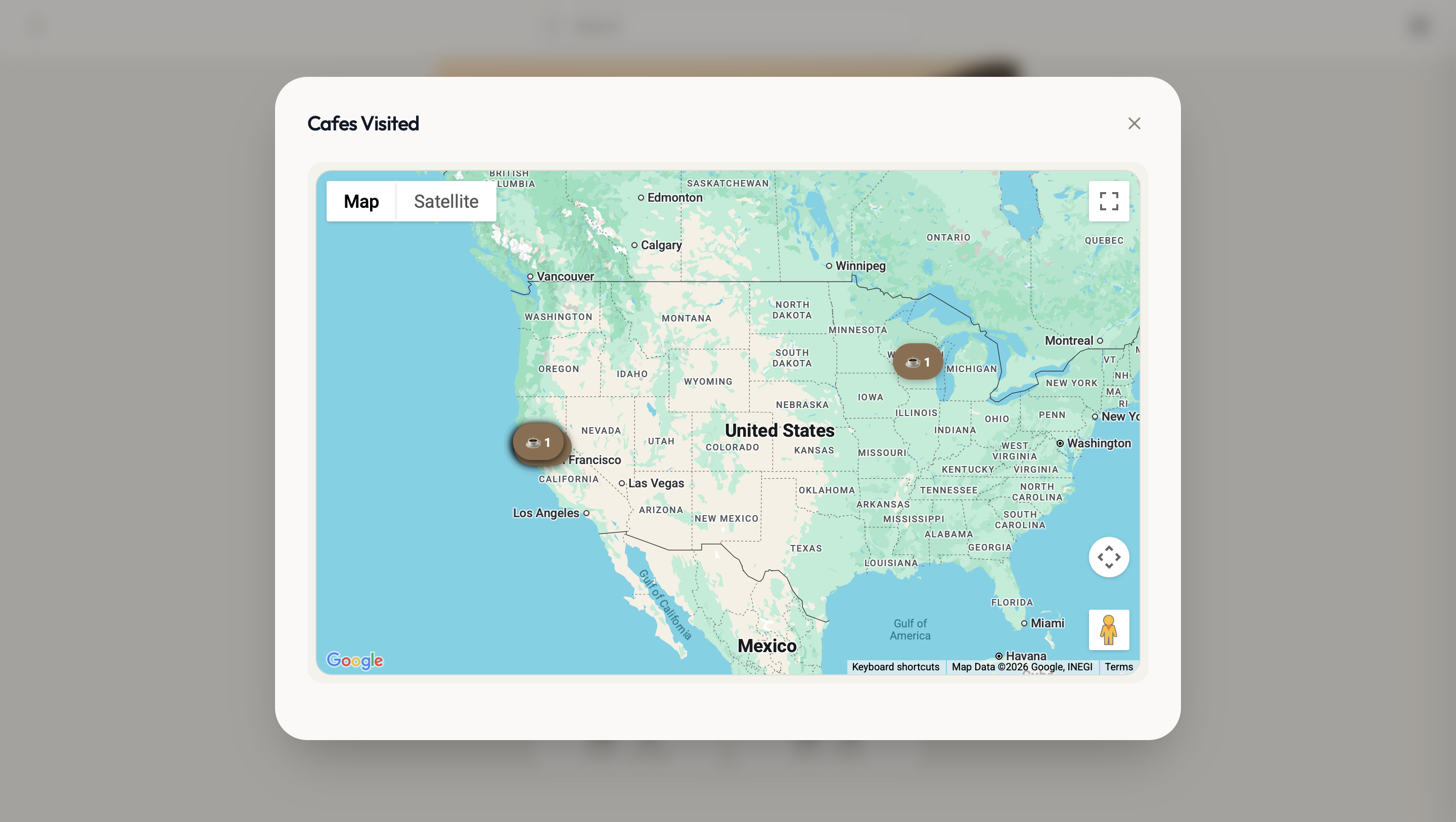 Similar to the nearby cafes page, but specific to a single user. It shows all the cafes you have visited in the world.
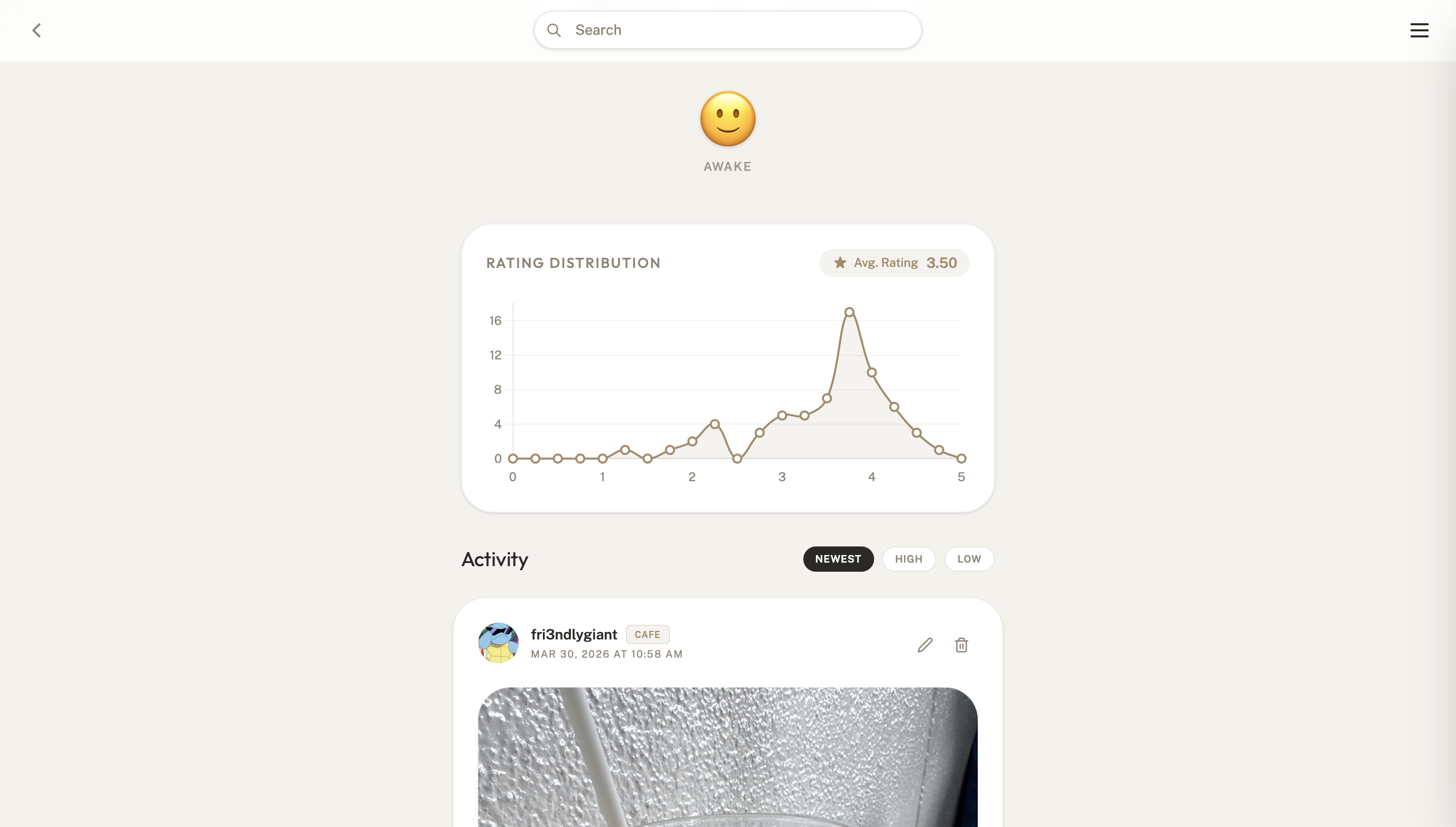 Scrolling down more on the profile page, an emoji is present that changes based on how many coffees the user has drank in the past 12 hours. Also, a rating distribution chart of the user’s ratings is shown.
How was it built?
To keep things simple, the entire tech stack is in GCP, and because I have limited access to only those that I invite for now, the entire project generally stays within the free tier limits. The frontend is built in React, and the backend api server written in Go.
It’s using these products in GCP:
- Google Cloud Run: hosting the backend api and frontend
- Google BigQuery: database for persisting all user data
- Google Cloud Storage: for saving user images
- Google Maps Platform / Places: For generating the Google Maps and receiving data about cafes.
Using Google Antigravity
I chose to use Google Antigravity as my AI coding platform over others, because it has generous rate limits and is very similar to Cursor. Without one of these AI tools, I wouldn’t have been able to dedicate the time to work on this. Having a general understanding of how the technologies work and how you want the frontend and backend to interact with each other is still very important though; sometimes without proper direction the AI will take the path of least resistance at the time and implement things in a less efficient non-scalable way.
Future plans
I am continuing to improve performance and add features to the website, and I would like to create a mobile app version as well. This is part of the reason I chose to write the website in react, to make the conversion to a mobile app easier in the future.

Drew Halverson
Software Engineer at Google, Ex Palo Alto Networks, Ex Amazon